
Commercial Roof Replacement in Deltona, FL
Full tear-off and replacement for commercial roofs in Deltona, FL: wet insulation findings, code timing, bid comparison and tenant planning for owners.
A replacement decision usually starts as a repair decision that kept getting postponed. The first patch holds through one wet season, the second holds for part of the next, and by the third the owner is paying a crew to chase leaks across a membrane sitting on insulation that has been wet longer than anyone can say. In Deltona, FL, where afternoon rain is routine through summer and a roof bakes under 92 degree July highs between storms, that slow failure is the usual story on strip retail, medical office and school buildings. We replace commercial roofs after the failure has been traced, priced against its alternatives and laid out so the owner can set the decision date.
That order matters. A tear-off is the most expensive thing that can happen to a roof, so it should follow evidence, not a bad week. The evidence we want before anyone writes a bid is a written finding on how much of the roof is wet, whether the deck is sound, and whether a recover over the existing system is a legitimate option or a way of burying a problem.
Failure Points: What Forces a Tear-Off
A roof earns replacement when repair no longer changes its direction. Insulation that has absorbed water stops insulating and adds weight to the deck. Seams open along a length rather than at one spot, which tells us the membrane has lost its flexibility. Flashings at walls and curbs pull away because the field sheet has shrunk behind them. Ponded water that stays more than a day after rain adds load and speeds every other failure.
A low-slope roof near the Howland Boulevard and Saxon Boulevard approaches to the I-4 corridor in Deltona that has been patched by several different hands has a hidden condition. Each patch was a separate decision, and together they cover the real state of the system. A core cut at a patched area and another at a clean area, compared side by side, tells the owner more than the surface does. If both are dry at the deck, a coating or partial scope may still be right. If they are wet through, replacement is the cheaper path.
What Waiting Costs: The Wet Insulation Problem
The price of delay arrives as a growing wet area. Water that enters at one open lap travels along the top of the deck and wets a patch many times larger than the leak. Every season of waiting enlarges that patch and the replacement scope with it, because wet insulation cannot stay under a new membrane. The new roof would trap the moisture, and the first sign would be blistering and a musty ceiling below.
Waiting also pushes the work into the wrong part of the calendar. A project that could run in the drier months gets forced into hurricane season, when crews are stretched and material lead times lengthen. Hurricane Charley passed directly over Deltona in 2004, and a roof already failing at its edges and seams is the first to lose its covering in a wind event like.
Options for the Owner: Tear-Off, Recover or Phased Scope
An owner is usually choosing among three paths. A full tear-off removes everything to the deck, which resolves hidden moisture and lets us repair the deck and rework drainage. A recover leaves the old system under a new membrane, which is faster and cheaper where the existing roof is dry and code permits it. A phased replacement divides a large shopping center or school into sections replaced across more than one budget cycle.
- Full tear-off: best when cores show wet insulation or deck damage.
- Recover: best when the roof is dry, the deck is sound and code allows another layer.
- Phased scope: best when occupancy or budget limits how much roof can open.
Each path has a failure mode the owner should hear before signing. A recover over wet insulation fails early. A phased job leaves old roof beside new roof, and the seam between them needs care. We put these risks next to the price so the comparison is fair across all three.
Code Timing: The Florida Building Code and the Scope
The Eighth Edition of the Florida Building Code took effect on December 31, 2023. When more than 25 percent of a roof is repaired, replaced or recovered within twelve months, the entire roof is expected to meet current code, unless the existing roof was already built to the 2007 code or later. That rule catches owners who think they are doing a repair when their cumulative work is a replacement. A secondary water barrier is also required when covering is removed and replaced over a wood deck.
Volusia County sits outside the High Velocity Hurricane Zone, so the project follows the general wind provisions. We put edge-metal tests, fastener patterns and attachment schedule in the scope and let the permit reviewer see it before material is ordered.
Bid Comparison: Closing the Scope Gaps
Two bids for the same roof can differ widely without either contractor being wrong. The gap is usually in what is left out. One bid prices deck repair as an allowance and another assumes none. One names the insulation thickness and cover board, another says only insulation as needed. We spell out every line a competitor might drop and flag the lines likeliest to become change orders once the old roof is open.
Our roof condition reports give the owner a baseline to measure every bid against, and our capital planning work turns the chosen option into a reserve line the finance side can use.
Working Around the Building: Tenants, Access and Weather
Many Deltona buildings stay open through reroofing. A medical office needs patient entrances clear and a school needs work arranged around bell schedules. The plan names where lifts and debris chutes sit and how each section is made watertight before the crew leaves, the same discipline behind our occupied building reroofing.
Weather sets the rest. Deltona sees about 51 to 53 inches of rain a year, mostly June through September, so we open only what the crew can close before the sky turns. White TPO or PVC membranes are the usual choices, and the building's wind design decides the attachment.
Commercial Roofing Questions
How do I know whether my Deltona roof needs replacement or a smaller repair?
The moisture survey decides it. If infrared scanning and core cuts show wet insulation across a broad area, replacement is the sound choice because wet insulation will not dry under a new membrane. If the wet area is confined to a drain sump or a curb, repair costs far less and the roof stays in service. We give the owner the survey, the core photos and both prices.
Will a replacement trigger code upgrades for the whole building?
Percentage of roof touched in twelve months matters most. Work above 25 percent of the roof area in a year generally brings the whole roof to current Florida Building Code, which can add edge metal, secondary water barrier and fastener upgrades. We check the history of recent repairs before pricing so the cumulative total is known.
What happens to my tenants during a tear-off?
Noise and access change. Stripping old membrane is loud, so we schedule it for the hours that suit the tenant, keep entrances clear, mark protected walkways and close every opened section before the crew leaves, so overnight rain finds a sealed roof.
How much lead time should I allow before hurricane season?
Material availability and permit review set the clock. Membrane, insulation and metal can take weeks to arrive in a busy season. An owner who wants the roof done before September, the month most susceptible to hurricanes here, should sign well before the wet season begins in June.
Can I replace only the worst section of a large roof?
Yes, when the sections drain independently and the adjacent areas are dry and sound. The tie-in between old and new roof is the detail that decides the outcome, and the 25 percent code threshold limits how much can be done without upgrading the rest. We map the roof into sections and price each one separately.
Call before the next heavy rain or before hurricane season begins, and we will walk the roof, show you what the cores found and price the options so the decision stays on your schedule.
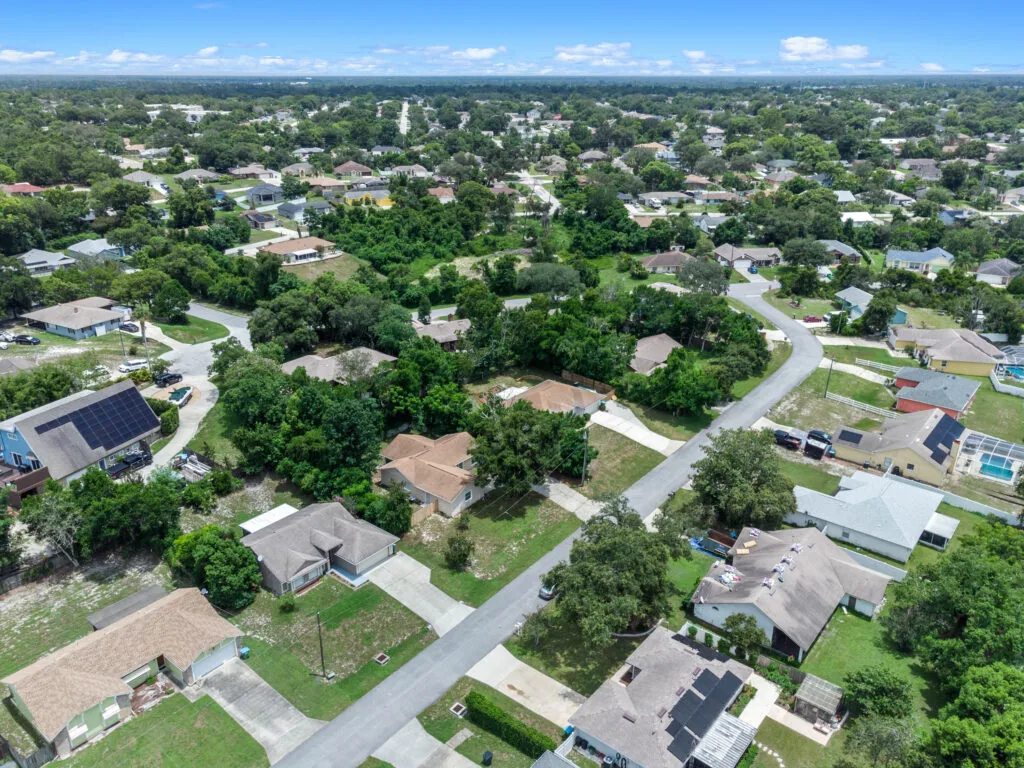
Commercial Roofers Deltona documents the roof before it quotes the work, so every scope starts from what is actually on the building.
Ready to Review Your Roof?
Tell us about the building, the roof and what you are seeing. We will outline the next practical step, whether that is an inspection, a repair scope or a replacement plan.