Roof Recover and Overlay in Deltona, FL
Recover a commercial roof in Deltona, FL only when the old system is dry and code allows it: moisture tests, deck checks, wind attachment and cost tradeoffs.
Recovering a roof saves real money, and it fails fast when the roof underneath was never dry. That is the risk stated plainly, and everything about a recover in Deltona, FL comes back to it. The building owner who is offered a second membrane over the first at a lower price deserves to hear what has to be true for that price to hold: the old insulation must be dry, the deck must be sound, the old roof must be flat enough and firmly attached enough to carry a new system, and the local code must allow another layer. When all four are true, a recover is a legitimate way to get a new surface without the cost and disruption of a tear-off.
We approach each recover as a finding first and a bid second. A moisture survey and a handful of test cuts tell us whether the old roof can carry a new one. If the answer is no, we say so before the owner has spent anything on the wrong scope, and we price a full replacement instead.
Eligibility: What the Old Roof Has to Prove
Four tests come before any recover proposal. The first is moisture. Infrared scanning at the right hour, followed by core cuts at flagged spots, shows whether the insulation is dry. Wet board under a new membrane does not dry out, it migrates, and blisters appear in the next summer. The second is the deck, which we sound from above and inspect from below where the ceiling is open. Rusted metal deck or soft wood panels have to be repaired and cannot be covered.
The third test is the surface. A roof with ponding water, wrinkled membrane or loose gravel needs correction before a second layer goes on. The fourth is attachment. If the old membrane or its fasteners are already pulling up, the new layer inherits that weakness. On buildings near Howland Boulevard or along the industrial streets of Orange City, a core cut on each roof is cheap insurance against the wrong scope.
Weight and Deck: What a Second Layer Adds
A recover adds a membrane, usually a cover board, and sometimes new insulation, so the deck carries more than before. For steel deck on most light commercial buildings the added load is modest. For older buildings with timber or lightweight concrete deck, or for roofs that already have two layers, the numbers need to be checked by someone qualified to check them. When deck type, age or condition makes weight a real question, we bring in a structural engineer.
The added height also matters. Every layer raises the surface a few inches. Curbs, wall flashings, rooftop equipment and drain bodies all have to be raised or extended to keep proper height above the new surface. The cost of those details is part of the recover price, and it is one reason a recover bid that looks very low is often missing them.
Code Limits: Where a Recover Is Not Allowed
The Florida Building Code, Eighth Edition, took effect on December 31, 2023, and its rules shape the recover decision. A repair, replacement or recovery that touches more than 25 percent of a roof within twelve months brings the whole roof under current code, unless the existing roof was built to the 2007 code or later. A recover counts toward that total. On a roof that predates 2007, a recover can therefore start the clock on upgrades to edge metal and attachment.
The secondary water barrier rule applies when roof covering is removed and replaced over a wood deck, and the code limits how many layers a roof can carry. We confirm the limit with the permit reviewer before pricing, because a roof that has already been recovered once may not be a candidate for a second recovery at all. Volusia County is outside the High Velocity Hurricane Zone, so the ordinary wind provisions govern.
The Money: What a Recover Saves and What It Does Not
A recover saves the cost of tear-off labor, disposal and, often, a portion of the schedule. It does not save the cost of the new membrane, the cover board or the detail work, and it can add cost when raised flashings and curbs are required. The saving is largest on big, simple roofs and shrinks on small, detailed ones where most of the cost is in the edges.
The other side of the ledger is service life: a recover over hidden wet insulation can fail in a few seasons, and the owner then pays for both the recover and a tear-off. Our capital planning work places the recover on a timeline next to the eventual replacement, so the owner sees the whole cost of ownership and not just the first invoice.
Wind and Attachment: A Lesson From Charley
Roofs in this part of Central Florida are tested by inland hurricane wind. Hurricane Charley passed directly over Deltona in 2004 and reached Seminole County with a 101 mph gust recorded at Altamonte Springs. A recover changes how wind loads reach the deck, because the new membrane is fastened or bonded through or onto the old layers. Fasteners must be long enough to reach the deck with the correct embedment, and an adhered system needs a clean, sound substrate.
Edges and corners take the highest uplift, so edge metal gets special attention. Under the current Florida code, metal edge systems that secure a low-slope membrane have to be designed for wind load and pass the specified tests. We include tested edge metal in the recover scope, since reusing the old metal on a new membrane leaves the weakest link in place. Our cover board and insulation work follows the same logic.
Sequence on the Roof: How a Recover Goes Down
The work moves in a fixed order. We repair deck problems, remove loose gravel or wet material, correct ponded areas, and install a cover board or slip sheet where the system calls for one. The new membrane follows, then flashings are raised and terminated, and edge metal goes on last. Each day ends with the open section sealed. Interior disruption is lighter than a tear-off, which suits a school or a medical office.
Membrane choice depends on use. TPO is common over dry single-ply and built-up roofs, and where a coating would meet the need, a restoration coating may be the lower-cost path.
Commercial Roofing Questions
Can you put a new roof over my existing one in Deltona?
Only after the old roof passes four checks: dry insulation, a sound deck, a flat and well-attached surface and a code-compliant layer count. Moisture is the first and most common failure. We scan and core the roof, then tell the owner in writing whether a recover is feasible or whether the roof needs full removal.
How long does a recover last compared with a tear-off?
A recover on a dry, sound roof can perform well, though it keeps the age of the deck and the old insulation beneath it. The membrane warranty is the manufacturer's to state, and we put its terms in writing before signing. A tear-off resets everything to new, which is why the roof's underlying condition carries so much weight in the choice.
Will a recover cause problems with the 25 percent code rule?
It can. A recover counts toward the 25 percent threshold, and if the existing roof predates the 2007 code, a larger recover can trigger whole-roof upgrades. Spreading work over several years does not help when it all falls inside one twelve-month window. We check the history of repairs before we price.
What does a recover do to my building's drainage?
Raising the roof surface shrinks the height of the drains and curbs relative to the new membrane, so each of them is reset or extended. Any ponding in the old roof gets corrected with tapered insulation or by cutting new drains, since a recover does not cure a drainage problem on its own.
Is a recover right for a roof with a leak history?
Where leaks came from details such as flashings and penetrations on a dry roof, yes. If the leaks have wetted the insulation over a wide area, no. The extent of saturated board separates those two cases, and we map it before the first estimate.
Call before the money is committed. We scan, cut and report on the existing roof, then say plainly whether a recover will work or whether you need a tear-off.
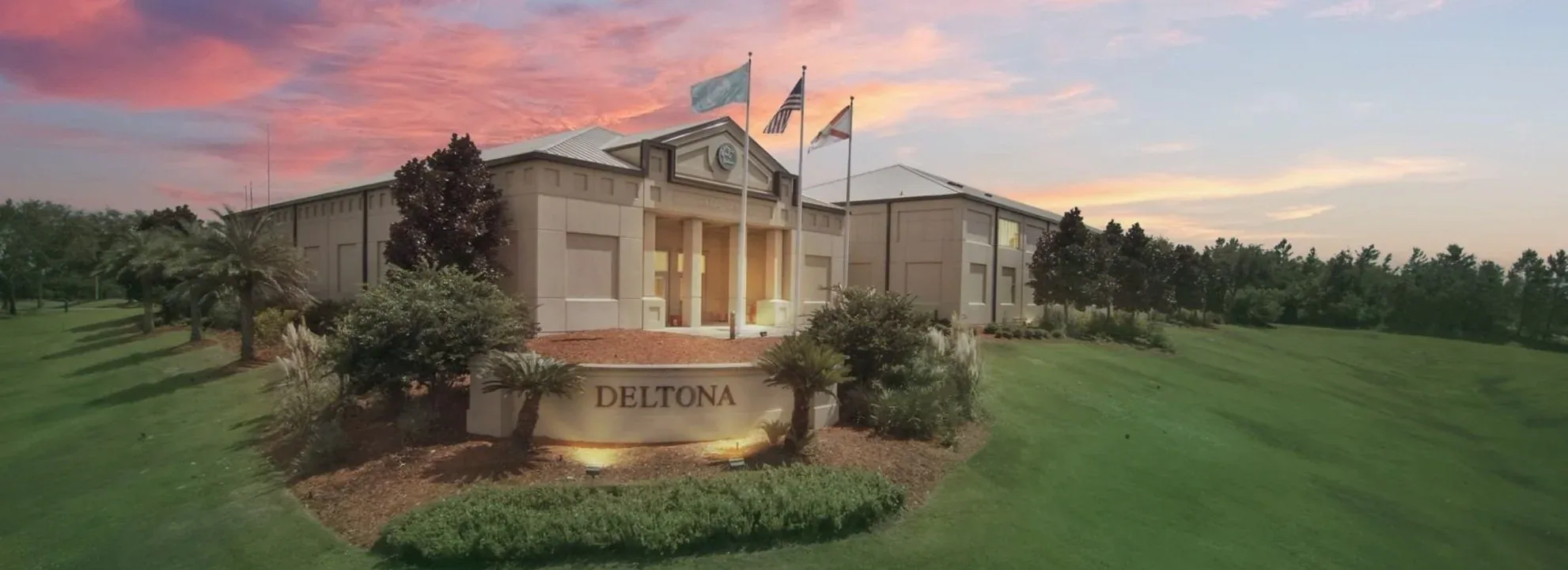
Commercial Roofers Deltona documents the roof before it quotes the work, so every scope starts from what is actually on the building.
Ready to Review Your Roof?
Tell us about the building, the roof and what you are seeing. We will outline the next practical step, whether that is an inspection, a repair scope or a replacement plan.